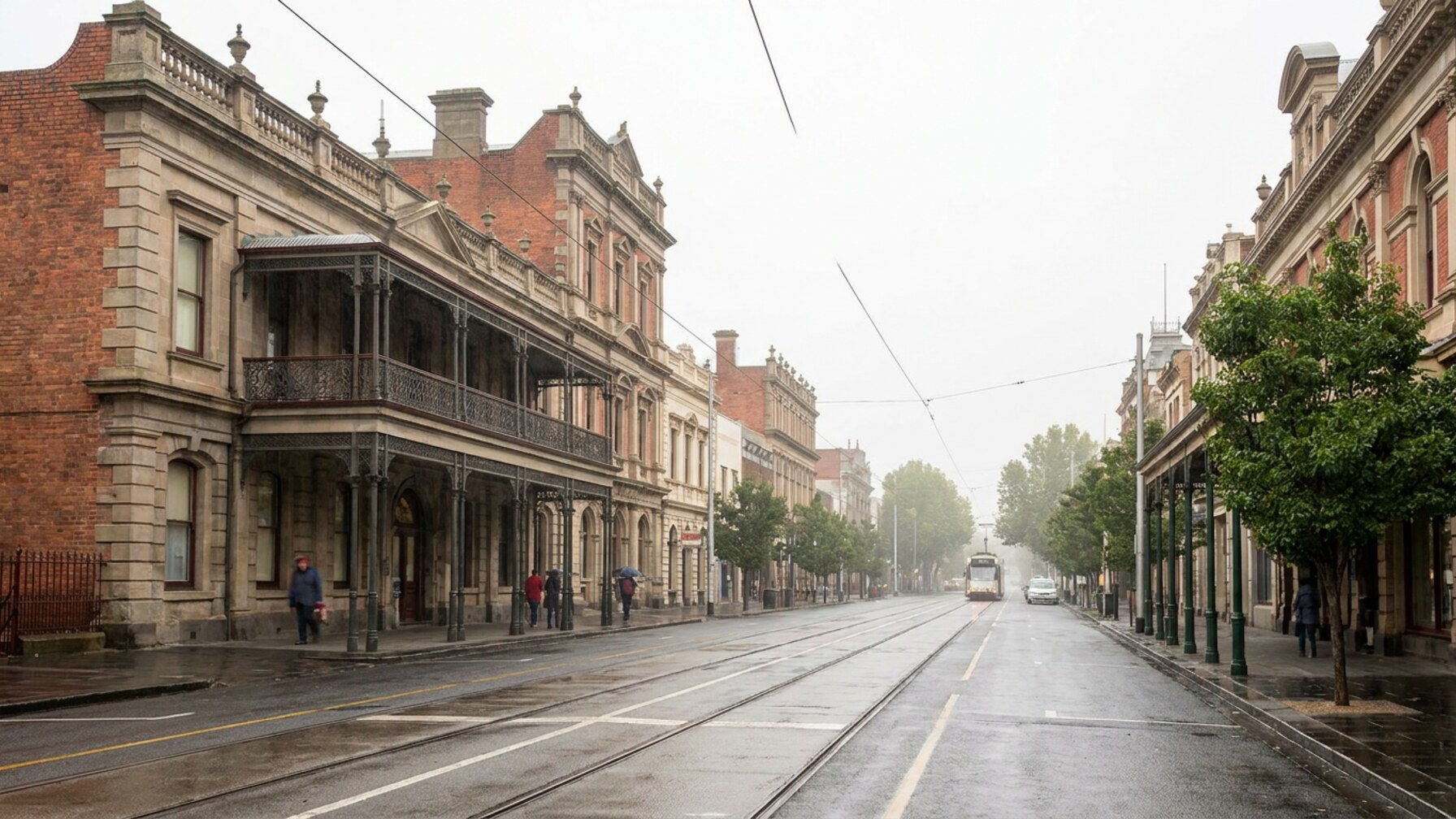
Ballarat's transport future hinges on three decisions council will face before November, and the clock is ticking on securing state government backing for either one.
The Regional Rail Revival program, announced by the state government earlier this year, opened the door to increased Melbourne-to-Ballarat services on the Ararat-Ballarat line. Currently, trains run hourly during peak periods and less frequently off-peak. That baseline hasn't changed substantially in five years. Council transport planners say a formal submission for frequency increases must land with the Department of Transport by October 31st to remain competitive for 2027-28 funding rounds. Simultaneously, the Central Highlands council is weighing an overhaul of parking management between Sturt Street and the Ballarat Railway Station precinct-a move that could free up land for development but will alienate motorists accustomed to free long-stay parking.
"We're looking at a fork in the road," said one local transport advocate who requested anonymity due to ongoing council consultations. "Invest in getting people onto trains, or double down on cars. You can't credibly do both."
Why the timing matters
Ballarat's population has grown 14 percent since 2016, reaching approximately 115,000 residents. The CBD attracted three major retail openings last year-a Bunnings on Ripon Street, expanded Coles supermarket, and a new mixed-use development near the Ballarat Showgrounds precinct on Howes Street. Each site generates traffic during peak hours. Congestion on Sturt Street now regularly backs up from the railway crossing to the Stockland shopping centre during weekday mornings.
State and local planners view increased rail frequency as the pressure release valve. Commuters currently drive to Melbourne for work because the 45-minute journey by car feels more reliable than a train arriving on an hourly schedule. More frequent services-ideally half-hourly or better-could shift behaviour. But state funding won't materialise without council committing matching dollars for platform upgrades and station precinct improvements.
The Ballarat Railway Station itself sits at the edge of the CBD's core retail zone. Upgrading the pedestrian connection from platform to Sturt Street-currently a 300-metre walk through a car park-would cost approximately $3.2 million. That's money the council hasn't yet budgeted.
The parking dilemma
Parallel to the rail question, council is consulting on a paid parking model for the CBD's 850 on-street spaces. Currently, most are free for up to three hours. Introducing 50-cent hourly rates would generate roughly $450,000 annually, council estimates show. That revenue could fund the station precinct work-or it could spark a backlash that sinks the rail proposal politically.
Business owners on Sturt Street remain divided. The Ballarat Chamber of Commerce hasn't taken a position. Some retailers fear parking charges will drive customers to Stockland or Lake Gardens shopping precincts, both on the city's edges with unlimited free parking. Others see it as essential to fund the infrastructure that keeps Ballarat competitive with regional rivals like Bendigo, which runs half-hourly train services to Melbourne and has already implemented CBD parking charges.
Council's community consultation period closes on September 15th. A formal decision on both rail submissions and parking policy is expected by late October. That timeline leaves barely six weeks for council to negotiate with the state government if it wants to meet the Regional Rail Revival deadline.
For commuters and business owners, the practical question is straightforward: Will Ballarat bet on trains or cars? The next two months will tell you everything you need to know about which direction the city's leadership actually believes in.
About this article●Beta
Published by The Daily Ballarat
Covering news in Ballarat. This article was generated by AI, under human editorial accountability and risk-based review and our reasonable editorial care. Sensitive material is held for human review before publication. See our reasonable editorial care.
Beta: AI-assisted and human-overseen. Details may be imperfect, so please verify anything important.