Ballarat is in the grip of a neighbourhood transformation unlike anything seen since the gold rush. New residential developments have consumed greenfield sites across the city's eastern and western edges, with construction cranes now permanent fixtures along Sturt Street and Mountain View Road. But this boom didn't arrive overnight. The pieces have been assembling for more than a decade, shaped by planning decisions, demographic shifts, and strategic infrastructure spending that positioned the regional city for growth.
The trajectory makes sense to anyone paying attention to Victoria's broader demographic patterns. Since 2015, Ballarat's population has grown by roughly 22,000 residents, pushing the city past 130,000 people. That growth rate-roughly double the national average-forced planners to reckon with a question that had simmered quietly through the 2010s: where would all these people live? The answer, councils and developers decided, lay in expanding residential precincts rather than intensive redevelopment of the established inner grid.
That strategic shift crystallised around 2018 and 2019, when the Ballarat City Council approved the Ballarat Planning Scheme Amendment C287, which rezoned significant tracts of land in the Ballarat West Growth Corridor. The amendment opened up land near Mount Clear and Nerrina for residential subdivision. Simultaneously, developers began acquiring holdings around Delacombe and in the precincts east of the Glenelg Highway-areas that had sat largely dormant throughout the previous decade.
Infrastructure Spending Opens the Floodgates
Crucial to enabling this growth was the State Government's commitment to regional infrastructure. Between 2020 and 2023, Victoria invested $185 million in the Ballarat Regional Airport upgrades, a project that signalled confidence in the city's trajectory. That same period saw funding announcements for duplicate rail line works-a long-mooted project finally approved in 2021 with a $300 million budget allocation. The rail duplications between Ballarat and Sunshine, while still years from completion, shifted perceptions. Investors and families looking beyond Melbourne's expanding fringe suddenly saw Ballarat not as a distant outpost but as a genuinely connected regional hub.
Ballarat Health Services' $200 million redevelopment announcement in 2022 sent another signal. The hospital's expansion-Australia's largest provincial health infrastructure project at the time-meant sustained employment and population draw. Schools followed. The announcement that six new government primary and secondary schools would be constructed across growth corridors between 2023 and 2027 provided families with the certainty needed to commit to new suburbs.
Development data tells the story with stark clarity. In 2019, Ballarat had approximately 340 residential lots approved for subdivision across all precincts. By mid-2024, that figure had exceeded 2,800 approved lots. Median house prices in established suburbs like Delacombe and Mount Clear, which hovered around $520,000 in 2018, surged to $680,000 by early 2026. New land in fringe developments now commands $350,000 to $420,000 per lot-a sevenfold increase in activity and value concentration in less than a decade.
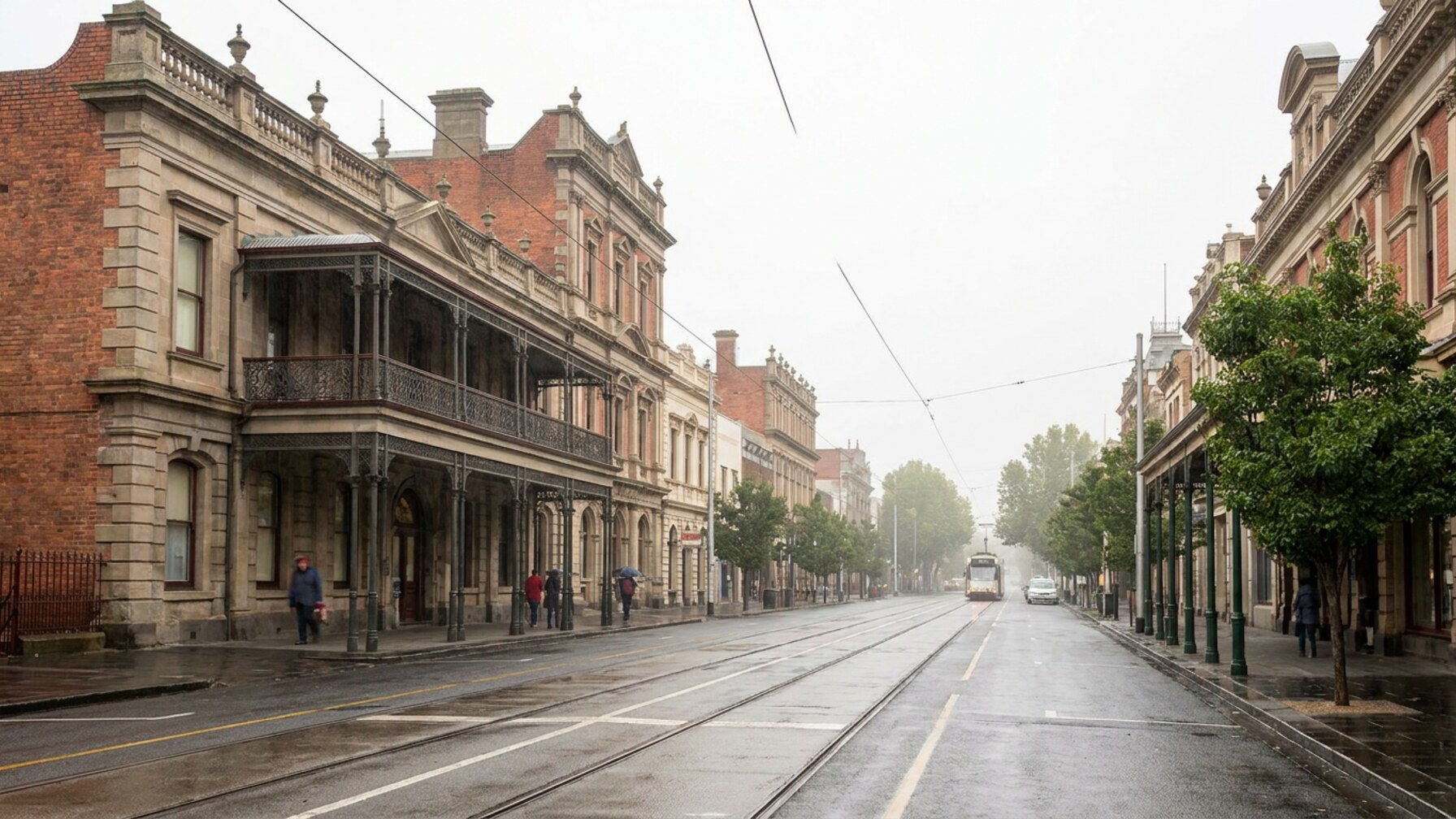
The Sovereign Hill precinct, long a cultural anchor, has influenced how councils think about heritage preservation within growth corridors. New neighbourhood designs in the west now incorporate conservation zones and heritage overlays, lessons learned from battles over the 2010s about protecting the city's gold-era character while accommodating expansion.
What Comes Next
The current development pipeline suggests another 1,500 to 2,000 residential lots will be approved over the next 18 months. But that growth isn't automatic. Councils and state authorities are now grappling with secondary infrastructure-roads, drainage, waste management-that wasn't fully addressed in earlier planning rounds. The Western Highway duplication project and upgrades to arterial roads like Grant Street remain unfunded commitments, potential bottlenecks if residential approvals continue outpacing road capacity.
For residents already living in transitional areas, the changes are visible daily. For prospective buyers eyeing Ballarat as an affordable regional alternative to Melbourne sprawl, understanding how we arrived here matters. This isn't speculative boom territory-it's the inevitable outcome of a decade spent building the case that Ballarat could handle growth. The city's planners and investors bet that infrastructure, jobs, and strategic zoning changes would attract people. The wager, so far, has paid off entirely.