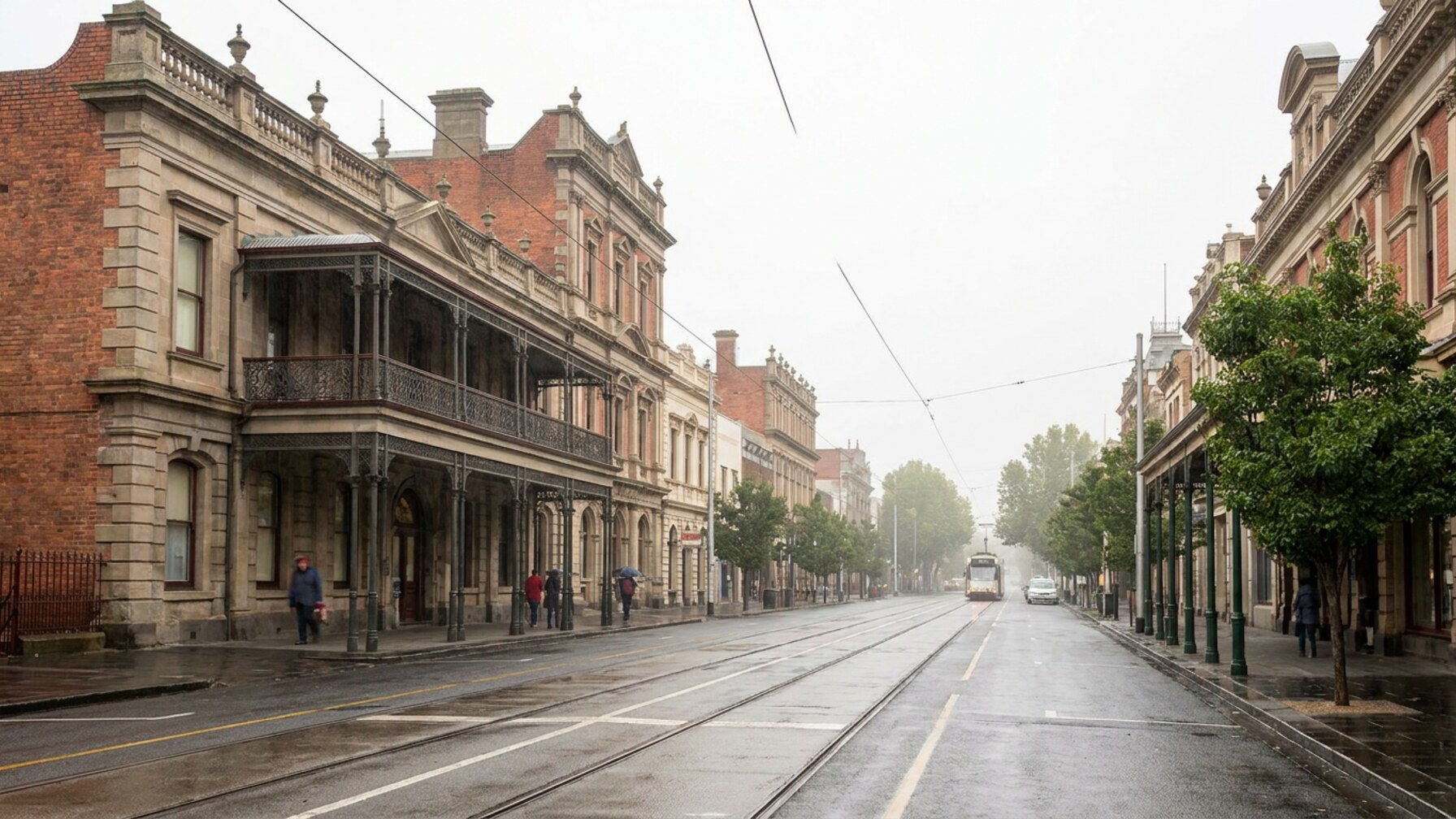
Ballarat is spending $225 million to electrify its rail line to Melbourne. That single project encapsulates the infrastructure squeeze facing regional cities worldwide: enormous capital demands, competing priorities, and the constant threat that projects balloon in cost or scope.
The comparison matters because Ballarat isn't alone. Cities like Bendigo, Geelong, and Toowoomba in Australia face similar infrastructure crises-aging transport networks, healthcare facilities straining under population growth, and local governments forced to squeeze every dollar from state and federal funding pools. Internationally, mid-sized cities from Eugene, Oregon to Reading in the United Kingdom are grappling with nearly identical problems: how to fund essential infrastructure when populations grow faster than budgets.
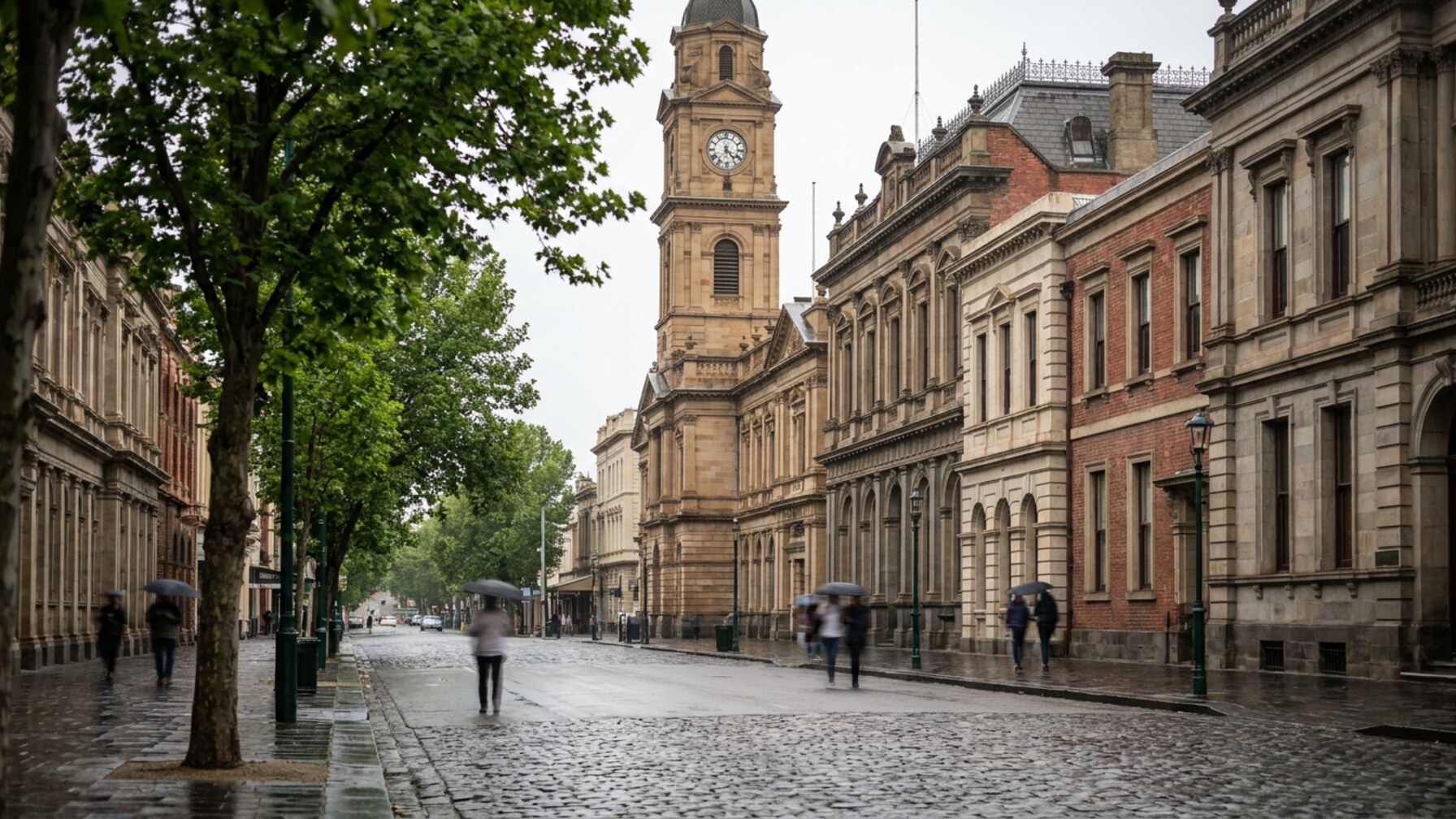
Here in Ballarat, the pressure is acute. The rail electrification project, expected to finish by 2029, sits alongside equally pressing needs. Ballarat Health Services is pursuing a $300 million capital expansion-new emergency department, intensive care beds, surgical suites-across its Main Street campus. Meanwhile, Sovereign Hill, the city's marquee tourism asset, continues seeking government grants to maintain its Victorian-era precinct and fund visitor attractions.
The money squeeze and what it reveals
The rail project has already weathered cost pressures. When the Victorian government announced the $225 million figure in 2023, it represented a genuine commitment. But transport infrastructure projects rarely stay on budget. The Perth-Mandurah rail line in Western Australia, often cited as an Australian success story, exceeded its original $2 billion estimate by hundreds of millions when accounting for cost overruns and scope changes. European cities face the same pattern-Berlin's airport expansion and London's rail projects have become textbook studies in cost inflation.
Ballarat's experience tracking alongside these peers reveals a structural problem: mid-sized regional cities lack the financial muscle of capitals but face infrastructure demands nearly as complex. A 2024 analysis by the Australian Institute of Infrastructure identified a $14.4 billion funding gap across regional Victoria alone by 2031. Ballarat's slice of that gap is substantial.
What Ballarat is doing differently
The city has attempted to bundle its infrastructure asks strategically. Rather than pursuing the rail electrification, hospital expansion, and tourism support in isolation, Ballarat and the Ballarat City Council have framed them as interconnected economic development. The logic: better rail connectivity increases visitor numbers to Sovereign Hill, which drives spending in the local economy, which supports the tax base that funds services like the hospital.
That integrated approach distinguishes Ballarat from some comparable cities. Toowoomba, Queensland's second-largest city, pursued its water independence project-a desalination plant completed in 2010-largely on its own terms. The $350 million facility became politically contentious and diverted resources from other infrastructure priorities. By contrast, Ballarat has attempted to coordinate its asks through the state government, positioning infrastructure as part of a broader regional economic strategy.
The city also benefits from stable demand. Ballarat's population has grown steadily-from about 96,000 in 2010 to roughly 125,000 today-providing a clear infrastructure justification. Cities like Bendigo face similar growth trajectories. Smaller regional cities, particularly in Western Australia's midwest, have struggled to justify major infrastructure investments when populations stagnate or decline.
What comes next is execution. The rail upgrade contracts were released for tender in mid-2025. Hospital expansion faces the usual Victorian government procurement timelines. Funding for Sovereign Hill's cultural programs remains subject to annual budget appropriations.
For Ballarat residents, the real test isn't how the city compares globally-it's whether these projects actually deliver. A faster train to Melbourne. A functioning hospital with adequate bed capacity. A tourism precinct that remains economically viable. Simple demands. Everywhere else tackling similar infrastructure challenges is betting they can deliver them too.