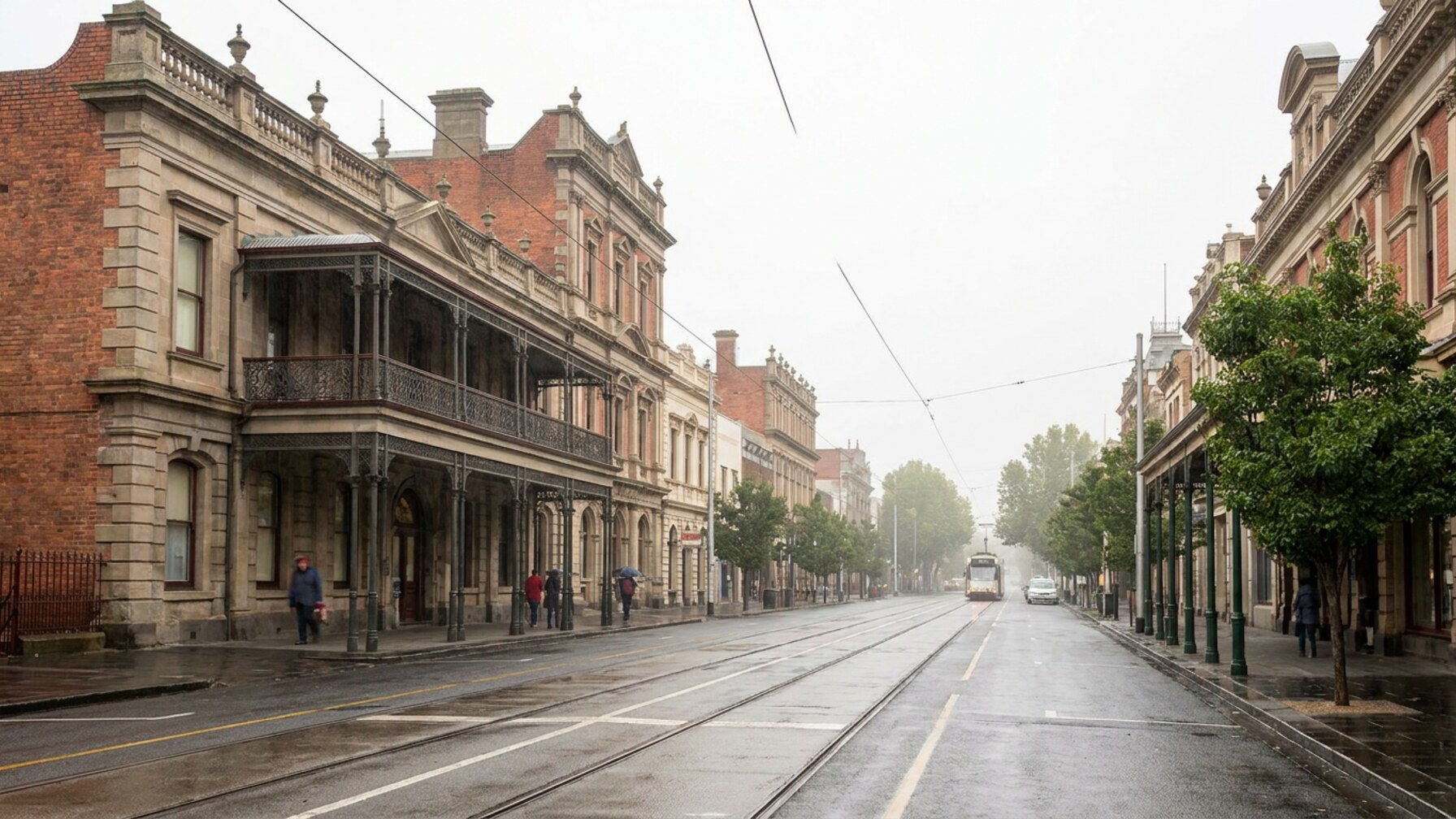
Ballarat's planning register shows four neighbourhood-scale development approvals lodged in the past fortnight, ranging from mixed-use retail complexes to residential intensification projects that will reshape streetscapes across the city's eastern and western precincts.
The timing matters. Regional Victoria's population pressures-driven partly by Melbourne overflow and remote work flexibility-have pushed Ballarat's planning department to fast-track assessments. Three applications moved from preliminary assessment to formal determination stage between Monday and Wednesday this week. The City of Ballarat's planning services team confirmed the volume represents a 35 percent increase on the same fortnight last year, driven by investor appetite for sites within 3 kilometres of the CBD.
The most significant approval involves a $28 million mixed-use development at the corner of Errard and Sturt Streets in Ballarat East. The project combines 62 apartments across four storeys with 1,200 square metres of ground-floor retail space. The applicant, Melbourne-based developer Precision Urban, told council officers the site would include three basement parking levels and rooftop landscaping. Construction is scheduled to commence in September, with completion targeted for late 2027.
Suburbs facing character vs. capacity tensions
Two secondary developments cleared planning obstacles this week with less fanfare but equal neighbourhood impact. A residential infill project on Lyonell Street in Ballarat West proposes 18 townhouses on a former single-family lot. Separately, a retail expansion application for the Mt Pleasant shopping precinct-adding 4,000 square metres of commercial space-received conditional approval from council officers on Thursday.
These approvals trigger familiar tension between density advocates and preservation-minded residents. Ballarat's median house price touched $545,000 in June, according to Domain Group data released Tuesday, up 12 percent year-on-year. Apartment and townhouse stock remains scarce. The Ballarat & District Real Estate Association reported a median rental rate of $385 weekly for a three-bedroom house, with vacancy sitting at 0.8 percent-well below the healthy 3 percent benchmark.
Local business operators see density differently. The Ballarat Chamber of Commerce issued a statement Friday supporting the Errard-Sturt project, noting that nearby retailers on Bridge Street and Lydiard Street had reported foot traffic increases following previous apartment completions. "Mixed-use developments anchor our CBD precinct," the chamber's chief executive said in written remarks.
What's next for residents and investors
Anyone living in Ballarat East, Ballarat West, or Mt Pleasant should expect construction notifications in coming weeks. The Errard-Sturt site sits one block from Ballarat Secondary College's northern boundary, while the Lyonell Street townhouses adjoin established residential streets lined with Victorian cottages and inter-war weatherboards.
The council's planning exhibition period for both major projects runs through July 28. Residents can lodge objections or submissions via the City of Ballarat's planning portal. Wednesday evening's planning committee meeting-held at the council chambers on Doveton Street North-will hear the first formal presentations, though decisions typically come later pending committee deliberation.
Investors and developers continuing to monitor Ballarat should note that the council has flagged tighter parking requirements for future CBD applications. New guidelines adopted in May require a minimum of 0.8 parking spaces per apartment within the defined central business district, down from 1.2 spaces previously mandated. The shift aims to encourage public transport use and reduce surface parking demands on local streets.
Property professionals report increased inquiry from Melbourne-based purchasers seeking renovation or development sites. Three vacant industrial lots on Dowling Street attracted multiple offers this week alone, with sale prices ranging from $385,000 to $510,000 per property. The activity mirrors broader regional trends, but Ballarat's proximity to rail services and proximity to Melbourne-an 80-minute train commute-explains local demand acceleration that shows no signs of slowing.