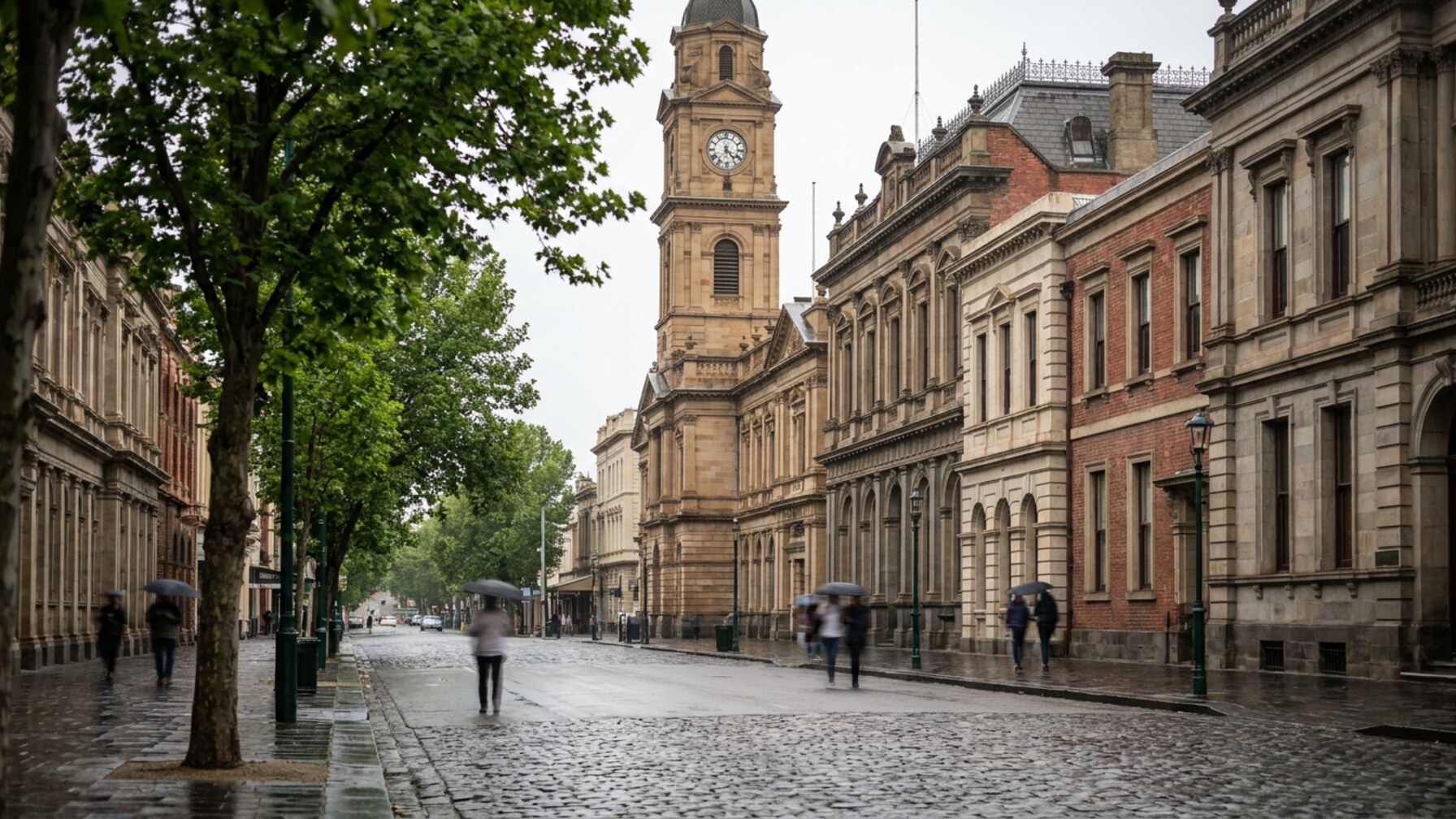
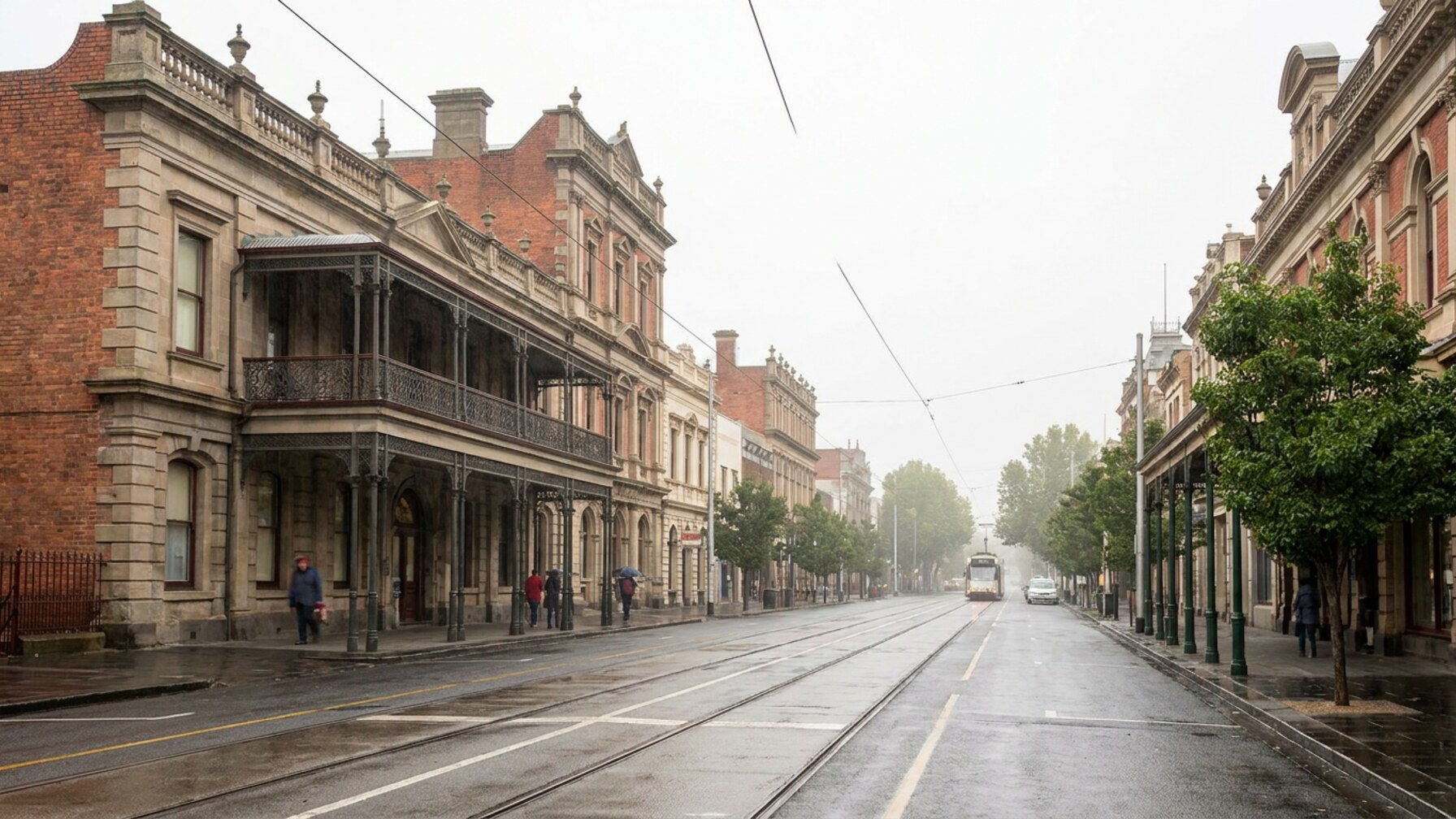
Ballarat's public collections have a problem shared by heritage cities from Bruges to Bendigo: digitised archives riddled with duplicate, mislabelled or algorithmically generated images that corrupt search results, waste curatorial hours and mislead the researchers and tourists who depend on accurate records. The question being asked along Sturt Street and inside the reading rooms of the Ballarat Library on Doveton Street is whether the city has the tools, and the budget, to deal with it before the backlog grows any larger.
The issue has sharpened over the past 18 months as generative AI tools have made it trivially easy to produce convincing fake photographs of goldfields-era streetscapes, Sovereign Hill re-enactments and Ballarat's Victorian-era architecture. When those images circulate online and eventually find their way into community submissions to heritage registers or educational resources, verifying what is real and what is synthetic becomes genuinely difficult work. Institutions in Ghent, Kyoto and Christchurch have all confronted similar crises in their own digitised municipal collections, and the strategies they adopted offer a useful benchmark for what Ballarat should consider doing next.
What Local Institutions Are Already Doing
The Art Gallery of Ballarat, on Lydiard Street North, has operated one of regional Victoria's more systematically digitised collections for several years, with tens of thousands of catalogue records available online. Gallery staff have been running internal deduplication checks on image metadata since at least 2024, according to publicly available board documentation. The process is labour-intensive: a single batch of colonial-era photographs can generate dozens of near-identical scans when multiple institutions contribute to a shared state repository, and distinguishing a genuine variant from a pure duplicate requires human review, not just software.
The Ballarat Heritage Office, which sits within the City of Ballarat's planning directorate, faces a parallel challenge managing the photographic records attached to heritage overlay applications. As property owners increasingly submit AI-enhanced or third-party sourced imagery to support heritage arguments, staff must cross-reference submissions against Ballarat's own verified photographic holdings, a process that has no formal technological backstop beyond standard planning assessment procedures.
Federation University Australia's Mount Helen campus runs a digital humanities research cluster that has engaged with image provenance questions in an academic context, though its work has focused more on methodology than on delivering a city-wide solution. A practical gap remains between what researchers can model and what council departments and collecting institutions can operationalise on regional budgets.
How Ballarat Compares Internationally
Christchurch, New Zealand, offers the closest comparable case. After the 2011 earthquakes, the city invested heavily in digitising its built-heritage record, then discovered, by 2019, that duplicate and degraded images had compromised roughly 12 percent of its online heritage catalogue, according to documentation published by Christchurch City Libraries. A dedicated remediation project, funded partly through national cultural grants, cleared the backlog over approximately 30 months.
Bruges, a UNESCO World Heritage city of comparable visitor numbers to Ballarat's Sovereign Hill precinct, adopted a federated image-authentication protocol in 2023, requiring any image submitted to its public municipal archive to carry a verified chain-of-custody hash. The cost of implementing that system, budgeted at approximately €340,000 across two financial years, is beyond what most Victorian regional councils could absorb without state or federal co-investment.
Ballarat's closest domestic comparator, Bendigo, began piloting image-verification software through its Golden Dragon Museum on Bridge Street in late 2025 as part of a Victorian Government creative industries micro-grant round. Ballarat has not yet secured equivalent dedicated funding for a comparable program, though the City of Ballarat's 2025-26 budget allocated resources toward broader digital transformation across council services.
The practical next step for Ballarat is to pursue co-funding through Creative Victoria's regional collections programs, potentially in partnership with the Art Gallery of Ballarat and the Ballarat Heritage Office, to build a shared image-verification workflow. Institutions in Christchurch and Bendigo have both demonstrated that the problem is solvable at regional scale, but only when there is a named program, a dedicated line item and someone accountable for the outcome. Without that, the duplicate images keep accumulating, and the archive becomes a little less trustworthy with every new upload.
Sources:
Source material used in preparing this article is listed below so readers can check the original record.