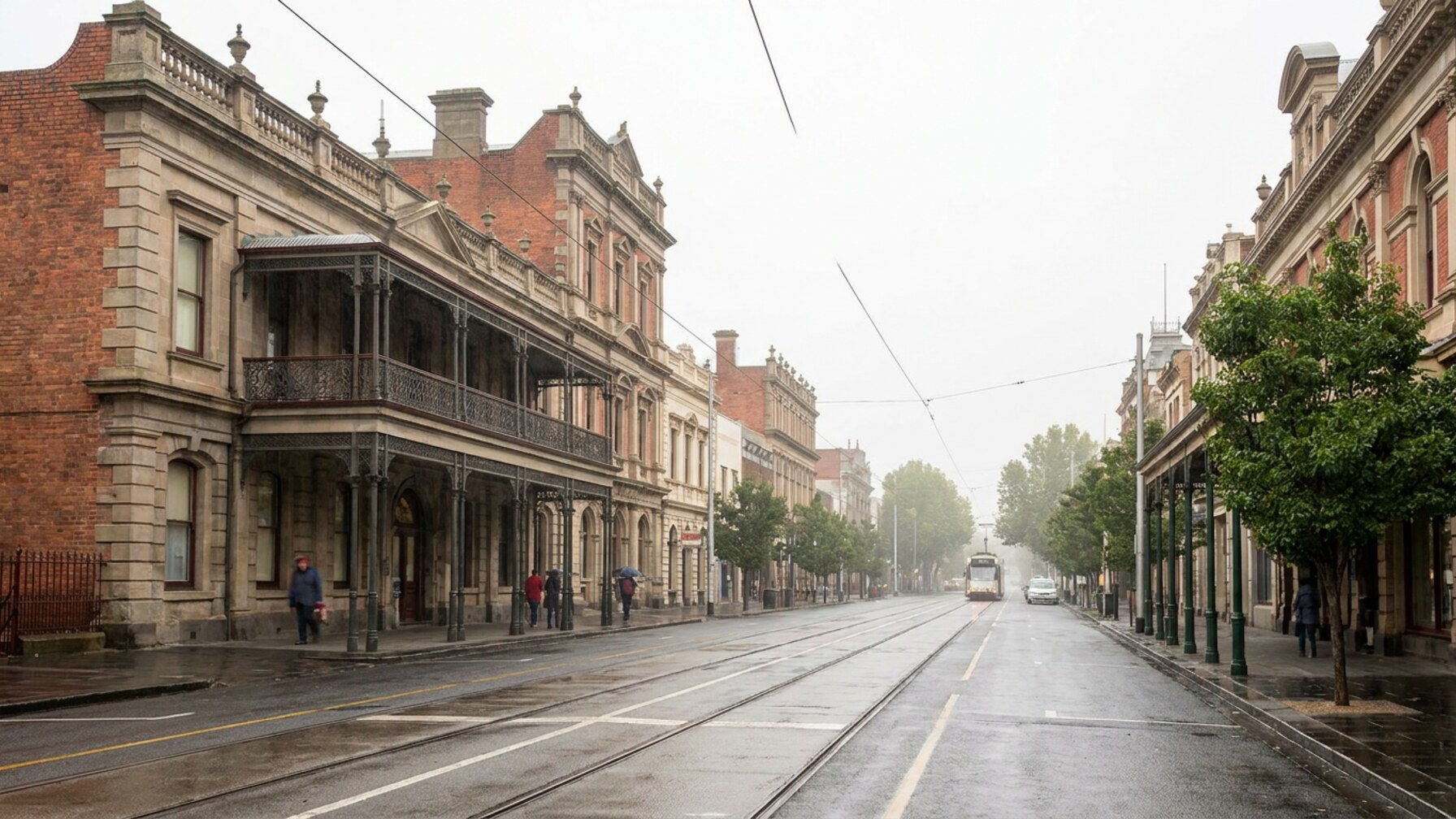
Ballarat has spent the past three years quietly assembling one of regional Victoria's more ambitious neighbourhood revitalisation efforts, and a growing body of international comparison work suggests the city is doing several things right, even as residents on the eastern fringe of Sebastopol and in parts of Wendouree West wait for promised services that have not arrived.
The timing matters because cities globally are at an inflection point. Glasgow's Violence Reduction Unit, which dismantled Scotland's reputation as a European murder capital by treating violence as a public health problem rather than a policing one, has attracted serious attention from Victorian government officials in recent weeks. Melbourne is now being watched as a potential adopter of the Glasgow model. What is less discussed publicly is that Ballarat has already been running a version of place-based early intervention through the Ballarat Community Health network, and the results, while modest, are measurable.
What Ballarat is actually doing
Ballarat Community Health operates from sites on Drummond Street North in Bakery Hill and on Skipton Street in Already, and its community connector program, funded partly through the Victorian Department of Families, Fairness and Housing under the Neighbourhood Development Program, logged 1,840 client contacts in the 2024-25 financial year. That figure, provided in BCH's annual accountability report tabled in March 2026, represents a 14 per cent increase on the previous year and coincides with a deliberate push to embed workers in Wendouree West, a suburb that scores in the bottom decile on Victoria's Index of Relative Socio-economic Disadvantage.
The City of Ballarat also runs the Neighbourhood Houses network, which includes the Sebastopol Neighbourhood House on Albert Street and the Ballarat North Neighbourhood House on Lily Street. Both reported waiting lists for financial counselling and emergency food relief through the first half of 2026, with demand driven partly by housing cost pressures, median weekly rents in Ballarat reached $410 for a three-bedroom house in the March 2026 quarter, up from $340 in the same period two years earlier, according to CoreLogic data.
Compare that with Medellín, Colombia, which transformed its most isolated hilltop barrios in the early 2000s through a program of cable cars, library-parks and embedded social workers. The city reduced its homicide rate by more than 90 per cent over two decades. The infrastructure spend was enormous and the political will was concentrated. Ballarat's version is smaller, slower and underfunded by comparison, but the theoretical architecture is similar: get workers into neighbourhoods before problems escalate, rather than responding after the fact.
The gaps that planners keep flagging
The honest critique from researchers familiar with the field is that Ballarat's approach suffers from coordination failure. Sovereign Hill on Bradshaw Street draws roughly 450,000 visitors annually and anchors the city's identity and tourism economy. The arts precinct around Lydiard Street has received consecutive rounds of state and federal cultural investment. But the social infrastructure in growth corridors, particularly the newer estates around Alfredton and Lucas, where more than 8,000 residents now live with limited community facilities, has lagged badly behind population growth.
Lucas, incorporated as a suburb only in 2013, still has no permanent neighbourhood house. The nearest is the Sebastopol facility, roughly six kilometres away and not walkable for families without cars. Urban planners who have reviewed the Ballarat Growth Area Framework point to this as the clearest divergence from best-practice models in cities like Freiburg, Germany, which mandates community centre provision as a condition of subdivision approval, not an afterthought.
The Victorian government's 2026-27 budget allocated $2.1 million for neighbourhood house infrastructure upgrades statewide, but Ballarat has not yet confirmed whether Lucas will receive any of that funding. The City of Ballarat's Community and Health directorate is expected to present a report to council in August 2026 outlining service coverage gaps. Residents in Lucas and Alfredton who want to register interest in a local facility can contact the council's Community Planning team directly through the Dana Street civic centre, or they can wait and see what the August report recommends.
Sources:
Source material used in preparing this article is listed below so readers can check the original record.
About this article●Beta
Published by The Daily Ballarat
Covering news in Ballarat. This article was generated by AI from the linked sources, under human editorial accountability and risk-based review and our reasonable editorial care. Sensitive material is held for human review before publication. See our reasonable editorial care.
Beta: AI-assisted and human-overseen. Details may be imperfect, so please verify anything important.