Business
Ballarat's Tech Sector Surges as Startups Capitalise on Regional Pivot
Rising property costs in Melbourne are pushing digital entrepreneurs to Ballarat, and local firms are already cashing in on the shift.
3 min read
Business
Rising property costs in Melbourne are pushing digital entrepreneurs to Ballarat, and local firms are already cashing in on the shift.
3 min read

Ballarat's technology sector is experiencing unexpected momentum as Melbourne-based startups and established digital agencies relocate to the region, attracted by lower overheads and easier access to regional markets. The shift, driven partly by last month's nationwide Telstra outage and broader telecommunications reliability concerns, has created immediate opportunities for local web developers, IT consultants, and business service providers who are seeing client demand spike.
The timing matters. Property costs in Ballarat's CBD have stabilised around $580 to $650 per square metre for commercial leases, roughly 40% below comparable Melbourne rates. After the Telstra incident exposed vulnerabilities in centralised infrastructure, businesses across regional Australia began reassessing their operational bases. Ballarat, with its fibre-ready networks and proximity to both Melbourne and Adelaide via the Western Highway, suddenly looked strategic rather than remote.
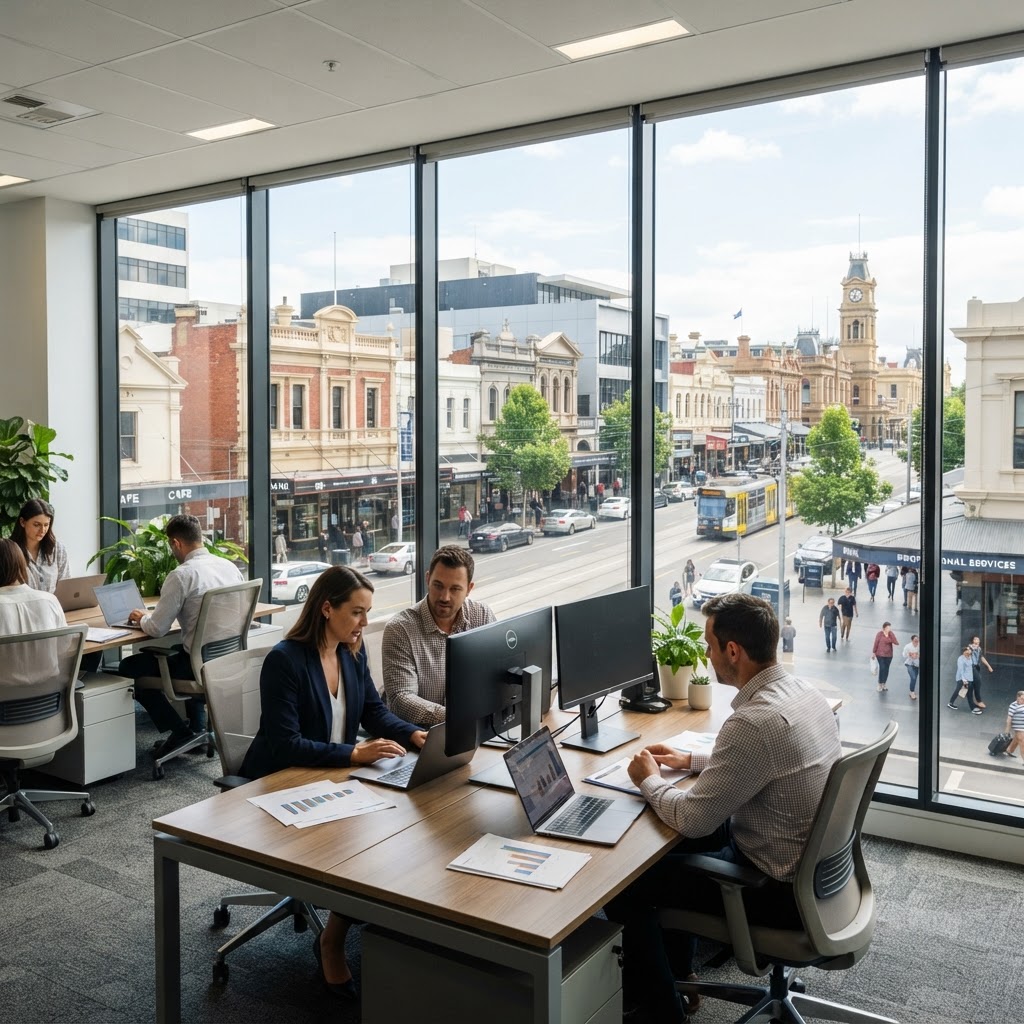
At least two established players are already capturing this wave. Ballarat Digital Agency, operating from Bridge Street in the city centre, has signed four new enterprise clients since late June-a pace their director says would typically take eight months. Meanwhile, the Ballarat Technology Precinct, a collaborative workspace launched in 2024 inside the former Sturt Street wool exchange, has hit 87% occupancy, up from 61% in March.
Property managers are reporting genuine interest from interstate firms. Commercial vacancy rates on Sturt Street and Mair Street have tightened from 12% to 8.4% in the past quarter, according to data from Ballarat Real Estate Council. Landlords are pushing for longer-term agreements, sensing the market has shifted. Rental inquiries from tech firms have jumped 34% year-on-year, the council noted in their June report.
The immediate beneficiaries extend beyond property owners. Local IT support companies, accountants specialising in tech compliance, and office fitout suppliers are fielding a steady stream of business inquiries. Henderson Business Solutions on Lyons Street, which provides IT infrastructure and cybersecurity services to regional firms, has hired two additional staff members to handle the workload increase. The company's owner told staff this week that client retention rates have improved measurably since firms relocated.
Ballarat's hospitality sector is also noticing the shift. Startup founders and remote workers who previously commuted to Melbourne one or two days weekly are now spending more discretionary time-and money-locally. Cafes along Sturt Street report busier mid-week trade, and at least one co-working operator has plans to expand their food service offerings.
Not everyone is benefiting equally. Traditional retail on Main Street continues to struggle, and the hospitality sector's gains have concentrated in the CBD, not outlying shopping strips. Skilled tradespeople report mixed outcomes-building trades have seen modest increases in fitout work, but the volume doesn't yet offset broader sector slowdowns elsewhere in the economy.
The question now is whether this momentum sticks. The regional shift remains fragile, dependent on ongoing digital infrastructure investment and sustained quality-of-life advantages over Melbourne. If Telstra and other carriers address their reliability issues, or if Melbourne property costs stabilise, some of Ballarat's newest firms might reconsider.
For now, though, the window is open. Ballarat's commercial property agents are circulating information packs to tech parks across Sydney and Melbourne. The Ballarat Technology Precinct has begun a targeted marketing campaign through industry networks. Local firms selling services to businesses-accounting, IT, real estate, office supplies-should expect phone calls through at least the next six months. Those positioned to capitalise on the influx won't have this window forever.

Business

Business

Business

Business

Business
Business
About this articleBeta
Published by The Daily Ballarat
Spread the word
Daily brief
Free, in your inbox before 7am. Weekdays.
The Daily Network — local news across Australia