Business
Ballarat's Job Market Signals Mixed Recovery: What Investment Flows Tell Us About Local Employment
New data on capital movement and hiring patterns reveals where Ballarat's economy is heading-and which sectors are worth watching.
4 min read
Business
New data on capital movement and hiring patterns reveals where Ballarat's economy is heading-and which sectors are worth watching.
4 min read

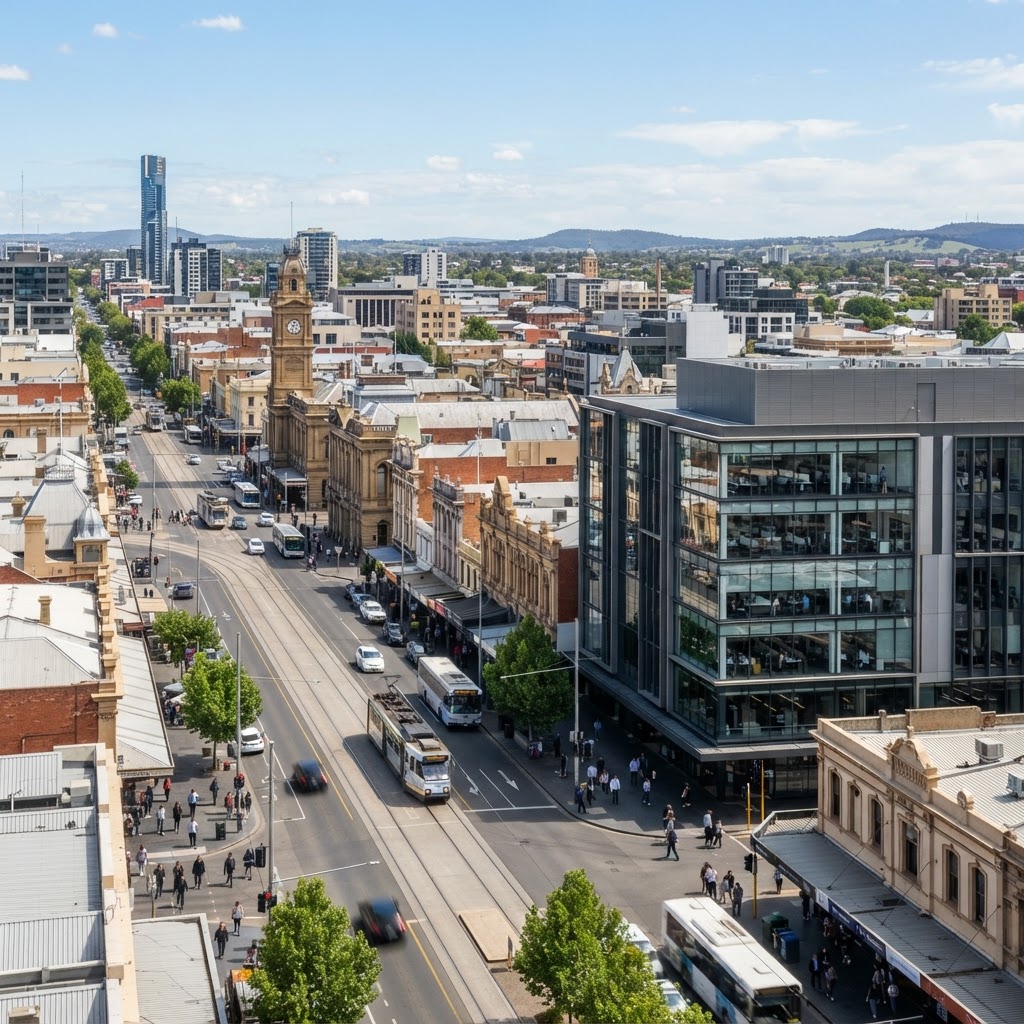
Ballarat's employment picture brightened last quarter, but not evenly. Job advertisements across the city climbed 12 percent between April and June, according to data released by the Regional Employment Services Network this week. Yet the growth clustered in specific pockets: healthcare, logistics, and skilled trades. Meanwhile, retail positions on Main Street and Bridge Street shrank by 8 percent as businesses adjusted staffing ahead of the winter trading season.
The employment churn matters now because Ballarat sits at an inflection point. The city has weathered two years of slower growth following the commodity cycle dip that hammered regional Victoria. Interest rate cuts from the Reserve Bank have finally loosened capital flows. Investment in commercial property jumped 34 percent in the first half of 2026 compared to the same period last year, according to Commercial Real Estate Development Association figures released Friday. That money is moving into specific locations and specific industries-and understanding where it goes tells you where jobs will follow.
The Ballarat Biomedical Precinct, anchored near the Ballarat Health Services campus on Drummond Street, has attracted $47 million in fresh investment since January. A venture capital fund based in Melbourne committed $28 million to establish a diagnostic imaging hub there. Two private aged care operators opened additional facilities nearby, creating roughly 340 positions. That's real hiring with long-term contracts, not casual work. The money kept flowing because state government backing for the precinct gave investors confidence in the fundamentals.
Compare that to the Ballarat Technology Park on Fenton Street, which has seen slower momentum. The precinct hosts 12 software and engineering firms employing around 480 people, but capital inflows remained flat year-on-year. Three firms signalled they would expand operations by 15 to 20 percent, yet the finance to support growth remains tight. A director at one firm told colleagues privately that venture capital dried up after the Telstra outage shook investor confidence in critical infrastructure. That's an indirect economic cost of last week's nationwide network failure-regional tech firms can't easily replace clients in Melbourne or Sydney if interstate operators question reliability.
Manufacturing employment actually climbed. The engineering and food processing sector added 287 net jobs between March and June, with demand from export markets offsetting domestic weakness. Average wages in manufacturing here sit at $68,400 annually, according to the Australian Bureau of Statistics quarterly release published Wednesday. That's $4,200 above the regional Victoria average, making the sector crucial for lifting household incomes in outer suburbs like Delacombe and Alfredton.
Unemployment in the Ballarat region stood at 5.1 percent in June, down from 5.8 percent a year earlier. The headline looks positive until you dig deeper. Labor force participation declined slightly to 62.3 percent, meaning fewer working-age people were actively seeking jobs. That signals some workers gave up searching rather than finding employment. Youth unemployment (people aged 15 to 24) remained stubbornly high at 11.2 percent despite the overall improvement.
Property investment also reveals where employers plan to expand. Commercial office leasing activity on Sturt Street in the CBD picked up in June after two quiet years. Office vacancy rates fell to 9.4 percent, the tightest market since 2019. Landlords raised rents by 6 to 7 percent for new leases, suggesting confidence that tenants could absorb higher costs because business outlook improved. Three professional services firms and one accounting partnership signed longer-term leases, indicating they expected sustained demand.
For jobseekers, the pattern is clear: qualifications in aged care, nursing, diagnostic imaging, and skilled trades offer the strongest pathway to work. The Ballarat Community Health Service and Ballarat Health Services combined employ roughly 3,200 people and are hiring. The city's logistics sector, supported by proximity to the Western Highway, accounts for steady entry-level and supervisory roles at 12-month rolling contracts. Retail and hospitality remain softer, with employers hiring casually rather than permanently.
Watch Ballarat's commercial vacancy rates and quarterly employment figures over the next six months. If investment capital continues flowing into the biomedical precinct and manufacturing holds its ground, the region could see unemployment dip below 5 percent by year-end. If the tech sector remains sluggish and retail cuts deeper, those gains could stall quickly.

Business

Business
Business

Business

Business

Business
About this articleBeta
Published by The Daily Ballarat
Spread the word
Daily brief
Free, in your inbox before 7am. Weekdays.
The Daily Network — local news across Australia