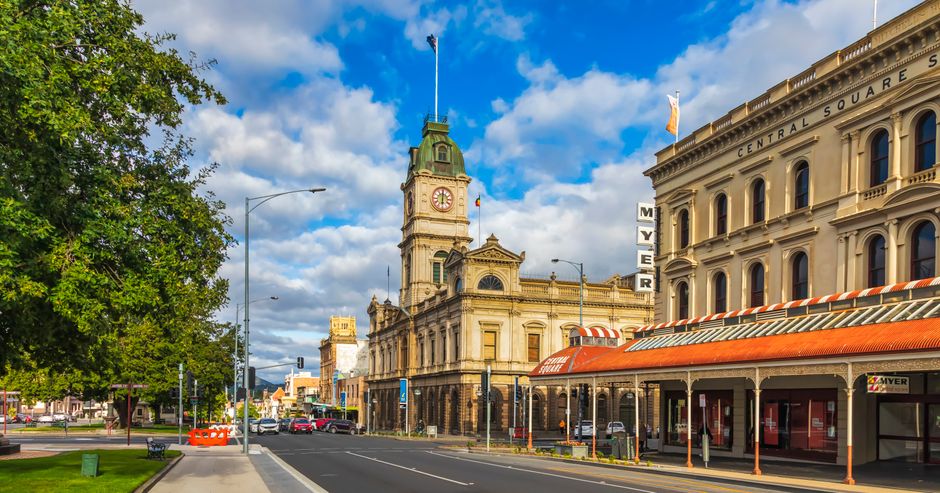
Ballarat Office Space: Hybrid Work Shift Reshapes CBD
Ballarat's CBD commercial property market is recalibrating as companies downsize footprints and upgrade to flexible office space with hybrid work amenities along Sturt Street.
How we report this▾
Our reporters are based in Ballarat and cover local government, business and community. We are independently owned and editorially independent. Read our editorial standards →
Ballarat's commercial property market is experiencing a quiet but significant recalibration. While major corporates across Australia continue to grapple with how much office space they actually need post-pandemic, local operators are moving decisively to capitalise on the transition.
The shift is most visible along Sturt Street and the eastern fringe of the CBD, where several mid-sized office buildings that sat at 60-70 percent occupancy just two years ago are now nearly full. Property managers report that companies seeking 2,000 to 5,000 square metres—rather than the sprawling 10,000-plus they occupied in 2019—are actively upgrading to higher-quality space with better amenities, natural light, and collaborative zones designed for hybrid workforces.
"We're seeing flight to quality," says one local commercial agent who tracks Ballarat's market. Older B-grade stock on Main Street and Lydiard Street struggles, but recently refurbished properties command premium rates. A refitted office tower near the Ballarat Town Hall precinct recently achieved 95 percent occupancy after a $3.2 million fitout focused on breakout spaces, video conferencing facilities, and wellness areas.
The beneficiaries so far are established property groups with capital to invest in upgrades. Several have acquired secondary properties at modest prices and repositioned them as premium offerings. One local developer has purchased three adjoining buildings near Lake Wendouree's eastern shore, marketing them collectively as a "wellness-focused workspace campus"—a concept that would have seemed niche three years ago.
Service providers are also winning. Commercial fit-out firms report steady work; recruitment agencies helping companies right-size their teams are busier than ever; and technology integration specialists are in high demand as organisations implement hot-desking systems and hybrid scheduling software.
The broader implication is that Ballarat's office market is maturing in ways that favour decisive, capital-backed operators over passive landlords. Average asking rents have remained stable at around $180-220 per square metre annually—competitive by regional standards—but the spread between A-grade and B-grade stock is widening. Vacant secondary properties in less-trafficked areas of the CBD face genuine headwinds.
For tenants and smaller companies, this creates opportunity: downward pressure on older stock, improved quality in refurbished buildings, and landlords increasingly willing to negotiate flexible lease terms to fill space. For investors with development appetite, Ballarat's mid-market positioning—neither Melbourne's premium pricing nor regional saturation—presents a genuine window to acquire, upgrade, and realise value.
The question now is whether this cycle continues or reverses as interest rates stabilise and larger corporations eventually reassess their return-to-office mandates.
This article was compiled by AI from the sources linked above and screened before publishing. See our editorial standards.